ما الذي تبحث عنه؟
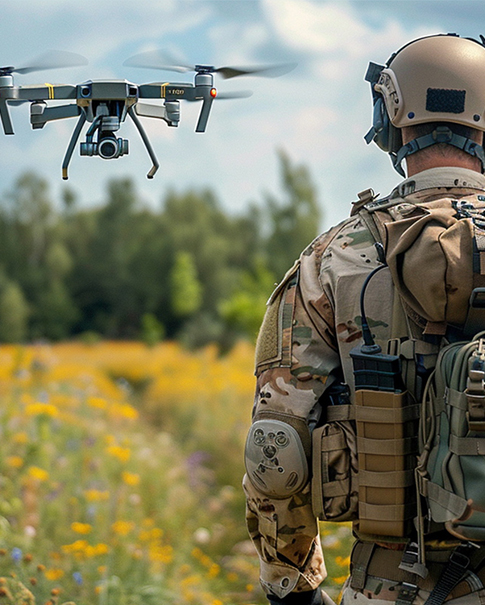
The increasing complexity of security, defense, and emergency scenarios has created a growing demand for equipment that can operate beyond traditional limitations. In remote mountains, wildfire areas, disaster locations, and difficult-to-access regions, unmanned technologies provide organizations with new capabilities for observation, transportation, and hazardous task management.
By combining aerial platforms, ground robots, and intelligent control systems, modern unmanned solutions are helping military, law enforcement, and emergency teams improve their response capabilities in challenging environments.
Heavy lift UAV platforms are transforming the way critical supplies are transported in areas where conventional vehicles cannot easily reach. Designed with powerful propulsion systems and high payload capacity, these cargo drones can support missions involving equipment delivery, medical transportation, disaster relief, and remote-area logistics.
Unlike traditional transportation methods that depend heavily on roads and infrastructure, heavy payload drones can quickly access isolated locations such as mountains, forests, islands, and disaster zones. This makes them valuable tools for emergency agencies and organizations requiring rapid deployment capabilities.
For wildfire and rescue operations, specialized firefighting drones can integrate thermal cameras, monitoring sensors, and payload release systems. These functions allow teams to detect heat sources, evaluate dangerous areas, and deliver firefighting materials with improved accuracy.
Explosive Ordnance Disposal (EOD) robots provide police and military teams with advanced robotic assistance when dealing with suspicious objects and hazardous environments. Through remote control technology, operators can examine potential threats and perform specific tasks without placing personnel directly in dangerous situations.
Modern EOD robotic platforms combine robotic arms, optical cameras, infrared imaging, wireless communication, and rugged mobility systems. These technologies enable operation in complex environments including urban areas, transportation facilities, industrial sites, and tactical locations.
With different sizes and configurations available, EOD robots can support various missions, from reconnaissance and inspection to object manipulation and explosive disposal operations.
Future defense and emergency operations will increasingly depend on connected equipment rather than individual platforms. The combination of UAVs, unmanned ground vehicles, advanced sensors, specialized vehicles, and protective systems creates a more complete response network.
From remote supply delivery and disaster management to security patrols and hazardous material handling, intelligent unmanned technologies are providing organizations with more flexible and effective operational options.
As robotics, artificial intelligence, and autonomous systems continue to evolve, unmanned platforms will become an important part of modern emergency response and security infrastructure worldwide.